

Diagnosed with Ulcerative Colitis at 51: Barbara’s story
Living with Ulcerative Colitis: Barbara’s Story
Being diagnosed with an autoimmune disease can be frightening, overwhelming and life-changing. For many people, the physical symptoms are only part of the experience. The emotional impact, from fear and uncertainty to losing confidence in your body, can be just as significant.
In this blog, Barbara shares her experience of being diagnosed with ulcerative colitis at 51, the challenges of living with an autoimmune condition, and the support that helped her feel less alone.
Barbara’s journey to diagnosis at 51
In January 2023, Barbara began noticing changes in her bowel habits and digestion. The following month, she went to her GP, who arranged blood tests and a stool sample. At first, she was told the results were fine. But when she returned in March, she learned that her inflammatory markers were raised and needed to be repeated.
By April, Barbara’s symptoms had become severe.
She was opening her bowels more than 20 times a day, with significant bleeding, and was struggling badly. After seeing a consultant, she was booked in for a colonoscopy, but the appointment was still weeks away.
A week later, after becoming incontinent, Barbara reluctantly went to A&E. She was admitted to hospital and, after three days, underwent a sigmoidoscopy, during which she was diagnosed with ulcerative colitis.
The experience was terrifying. Barbara had gone from being a fit and active person, walking three to five miles a day and going to the gym regularly, to being incontinent, in severe pain and losing control over her body.
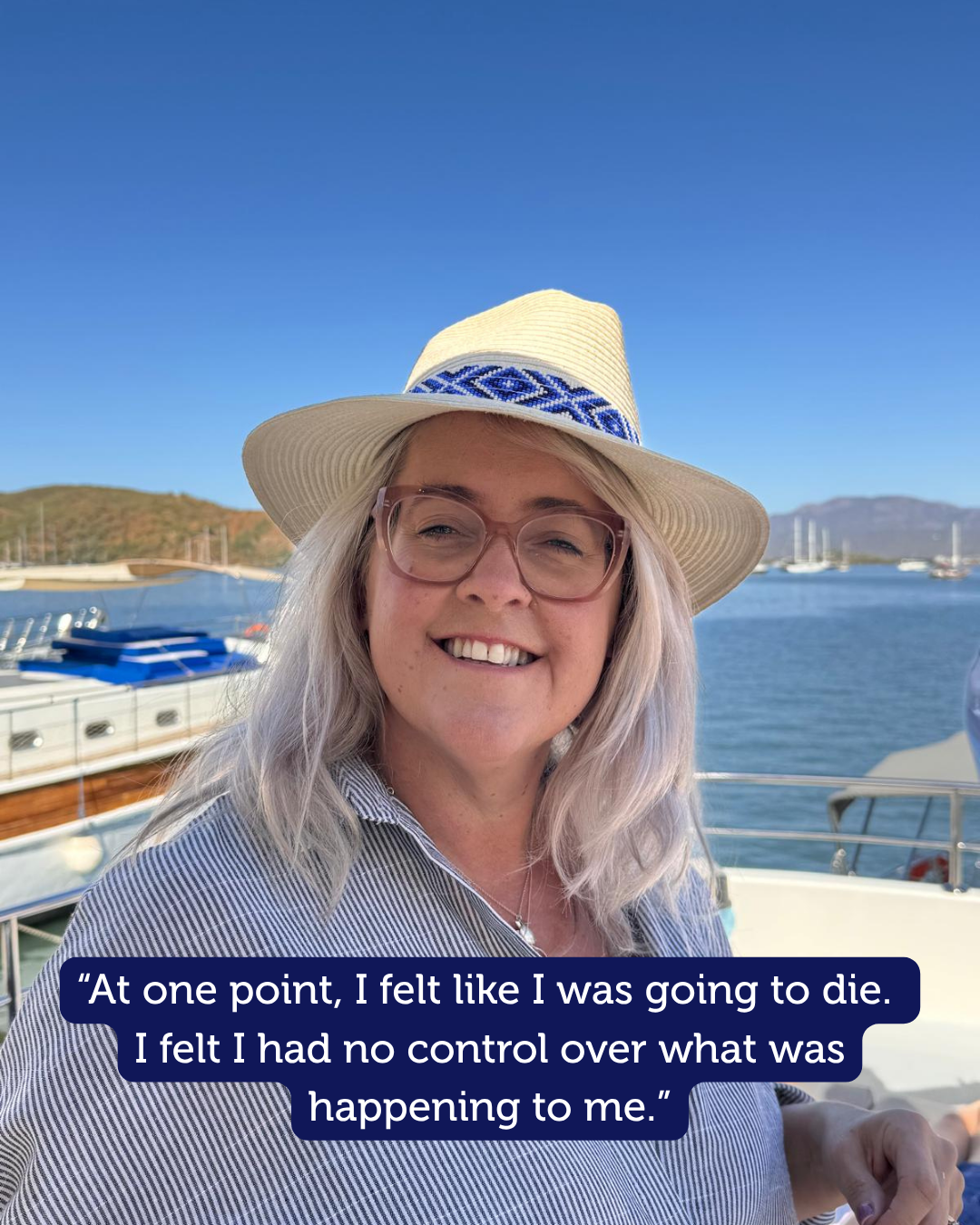
“At one point, I felt like I was going to die. I felt I had no control over what was happening to me.”
Barbara spent 15 days in hospital. Early on, when her symptoms did not begin to settle, she was also told she might need an irreversible stoma, adding even more fear to an already traumatic time.
Living with uncertainty
One of the biggest challenges she has faced is learning to live with the uncertainty of an autoimmune condition. She describes losing confidence in her body and, in the early stages, feeling passive in decisions about her care. Suddenly, she felt medicalised rather than simply herself.
Although she trusted her consultant and IBD nurses, Barbara found it difficult to accept that even medical professionals could not predict which treatment would work for her. The uncertainty around treatment, together with the possible side effects, felt overwhelming.
She was also carrying worries about the future, both for herself and for her children.
“I just couldn’t see my life ever being the same again.”
For Barbara, one of the hardest things about autoimmune disease has been the sense of having no real control. What works for one person may not work for another, and even helpful routines can change during a flare.
How ulcerative colitis has affected her life
Barbara says she feels fortunate that she has not had another flare since her diagnosis nearly three years ago. Even so, recovery took time.
At first, she slowly began to rebuild confidence in her body as she recovered from the initial flare. But psychologically, the impact has lasted much longer.
“Physically I have slowly come to resemble myself before my diagnosis but psychologically I feel less robust than I was.”
Barbara also describes living with an autoimmune disease as isolating. Comments from others, even when well-meaning, can be painful and can affect how connected you feel to friends and family. At times, she has felt that no one close to her fully understands what she has been through.
Since her diagnosis, she has become much more intentional about looking after herself and prioritising self-care.
What Barbara would say to someone newly diagnosed
Barbara’s experience also shaped how she supported one of her children, who was diagnosed with Crohn’s disease last year at the age of 21.
Having already been through a diagnosis herself, she was able to help guide him through the investigations, procedures and practical realities of hospital care, things that can feel especially daunting when everything is new.
Her advice to others who have recently been diagnosed is simple and powerful:
“Lean into support, whether that’s your medical team, friends, family or reaching out to The Wren Project. Navigating everything that comes with an autoimmune disease can feel isolating and overwhelming.”
The biggest support during her journey
When asked what has been the biggest support during her journey, Barbara is clear: The Wren Project.
Barbara first heard about The Wren Project through the Crohn’s & Colitis UK Facebook group.
It took her four months to find the courage to reach out and speak openly about how she was feeling. When she did, the support made a meaningful difference. Barbara says that from her very first contact with The Wren Project, she felt heard.
“I remember crying throughout the screening call. But even then, the person I spoke to was so supportive and empathetic.”
Barbara describes feeling vulnerable and frightened about what her “new normal” might be, and unsure whether life would ever feel the same again. Through listening support, she was given space to express that fear and feel truly heard.
“John was amazing. He listened, he empathised, and I felt like I could begin to explore what I now know was trauma from my hospital stay and diagnosis. I felt validated and that diluted the intensity of feeling so alone with what I was experiencing.”
Barbara says she will be eternally grateful to The Wren Project and to John for the support she received.
She hopes to volunteer for the charity herself once she passes the volunteer training, and has already done some fundraising because she believes that for people living with autoimmune disease, this kind of support is essential.
Her story is a powerful reminder that while autoimmune disease can profoundly affect both body and mind, feeling heard, supported and understood can make a real difference.
Barbara shared her story with the Wren Project as part of our Wren Voices campaign. If you would like to share your experience of autoimmune disease with us, you can reach out by emailing hello@wrenproject.org.
If you live with an autoimmune disease and would like to access free emotional support from the Wren Project, you can reach out to us here