

Living with Rheumatoid Arthritis - Michelle’s story
Getting a rheumatoid arthritis diagnosis
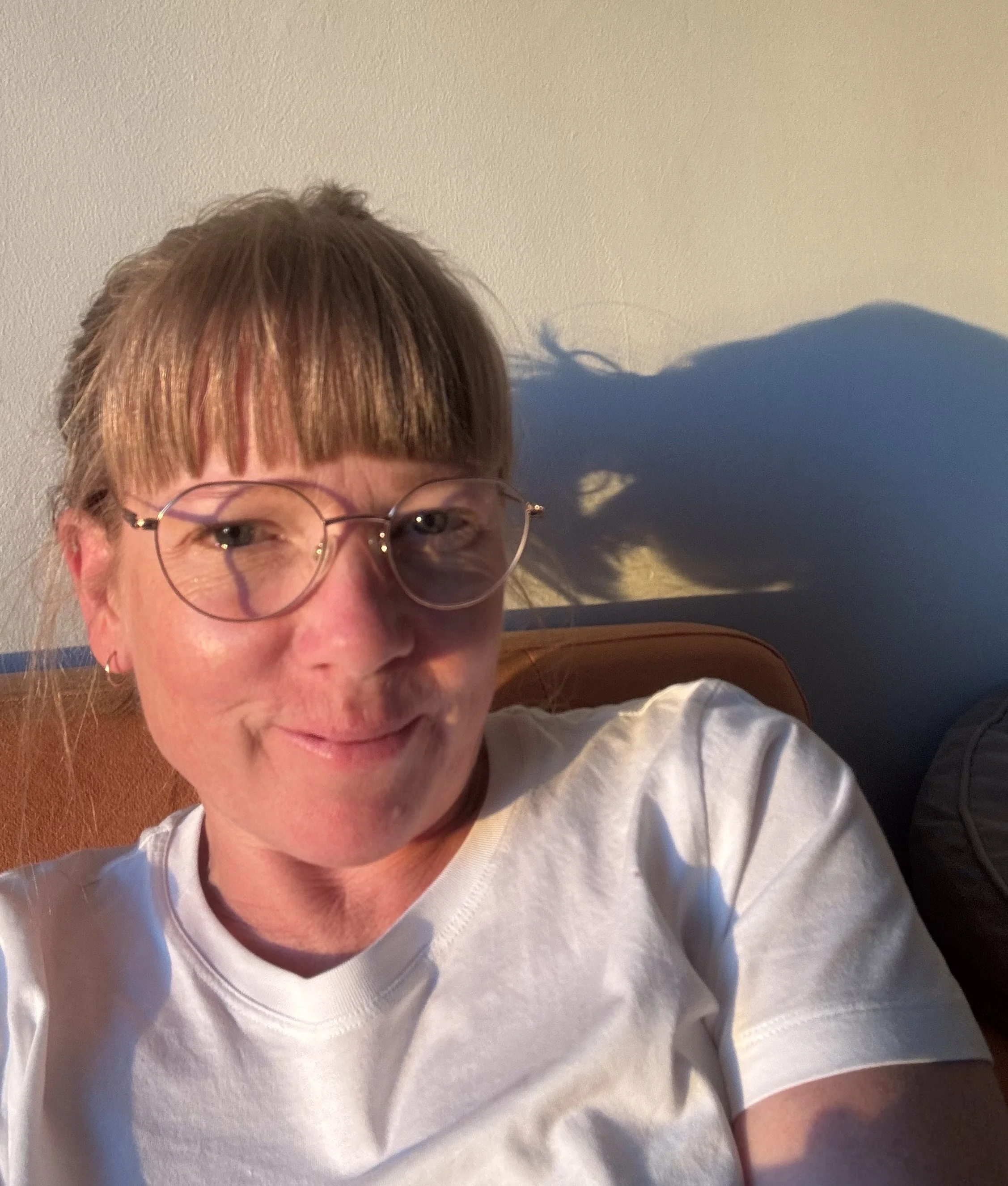
Michelle’s journey started in July 2022 when she was 49 years old, a mum of three school aged children and a specialist nurse. She started experiencing pain in her feet which made it difficult to simply go up and down stairs. Michelle initially put it down to hormones, but after a visit to a doctor for some blood tests she soon realised it was something more serious.
“The results showed an anti-CCP level that my GP described over the telephone as off the scale. I was referred to a rheumatologist, who immediately started me on disease-modifying drugs. The drugs made me feel sick and the pain persisted and progressed to both hands, and my lower back.”
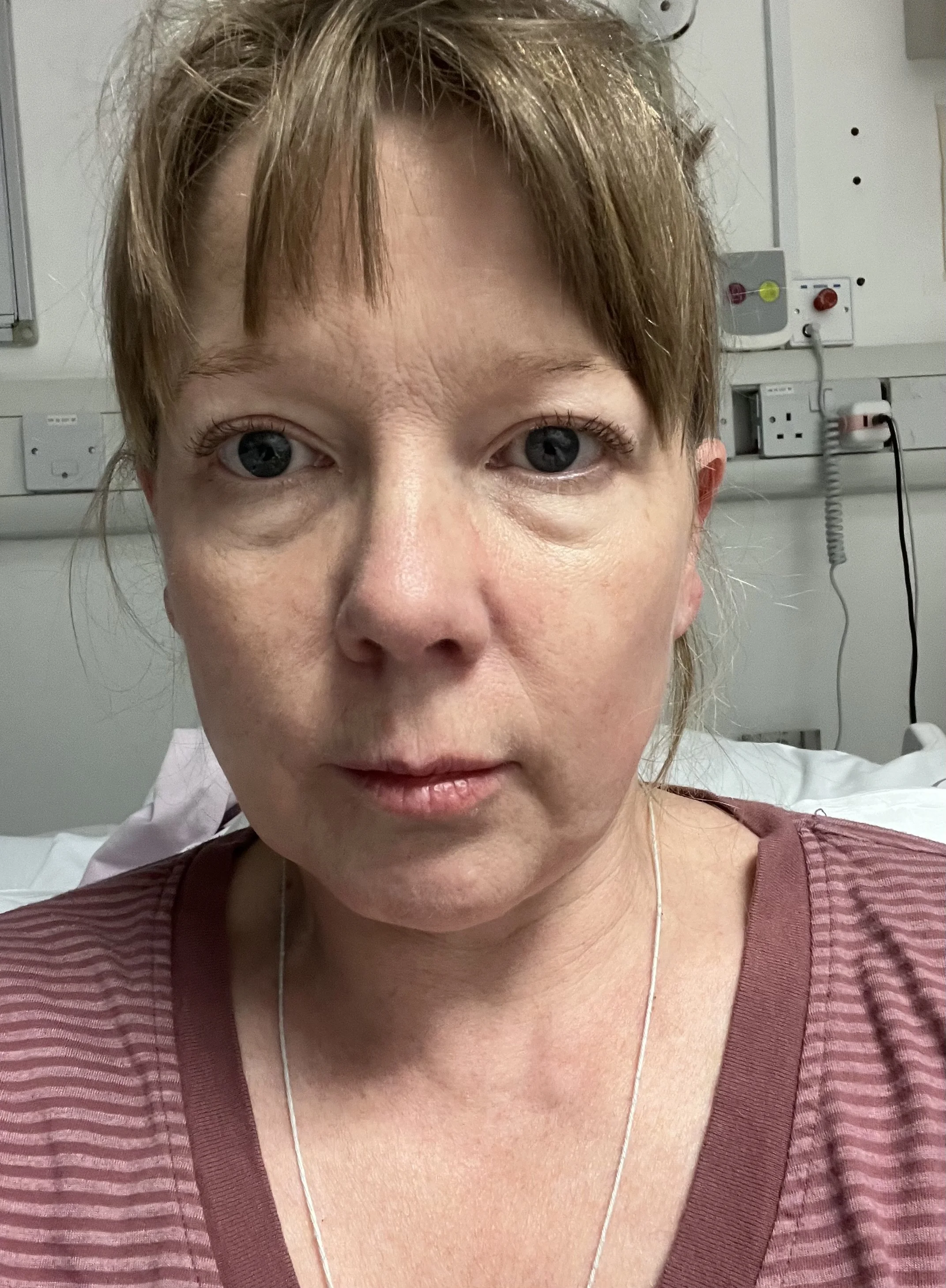
Michelle’s treatment escalated quickly, moving through several medications and eventually onto biologic therapy, but rather than improving, Michelle’s symptoms became worse. Her skin became discoloured, she developed a livedo rash and small vesicles appeared on her skin that later ulcerated and scarred leaving her feeling self-conscious.
“I had no energy, no appetite, and was losing weight, and I felt utterly miserable. I felt that I was being ignored.”
Michelle’s husband could see the despair she was in and they made the decision in early 2024 to transfer Michelle’s care to a different hospital. Michelle’s treatment was halted which meant she had to start everything again from the beginning. What followed was a long series of investigations, including a muscle biopsy, nerve conduction studies, MRI scans, a PET, CT, and ultrasound scans.
“It was at this point that the possibility of overlap syndromes with Rheumatoid Arthritis was raised, a term I had never even heard before. Four years later, Rheumatoid Arthritis is a definite diagnosis but I still have no real clear diagnosis of the other symptoms, something I struggle to come to terms with.”
Challenges with living with Rheumatoid Arthritis
The biggest challenge for Michelle has been the overwhelming fatigue that comes with living with an autoimmune disease. She explains that there were days that she would sleep for hours, sometimes only waking briefly over a period of several days and Michelle feared she would be lost to sleep if she didn’t pace herself carefully. She lost a lot of weight, experienced concentration difficulties and found walking difficult due to the extreme fatigue.
Michelle had to accept that she would need to use a wheelchair when she went outside, which was a significant adjustment in her life.
“Perhaps the biggest learning, though, has been accepting the disease itself, and learning not to torture myself over the things I now find difficult. It is very hard to ask for help, but I had to ask my sons to carry me to the bathroom in the early days. For a long time I carried a constant sense of guilt, and it has taken real effort to let that go, and sometimes it tries to creep back in.
The challenge of an invisible illness has also been difficult, the comments from well-meaning people. I have had to accept that some people are often quick to judge, but thankfully there are also some very kind and supportive people.”
Lasting impact on Michelle’s life
The impact of Michelle’s illness has been life changing. At the time of her health investigations, Michelle was a specialist nurse working full time and a mother of three school aged children.
“Almost overnight, I went from being someone who kept everything moving to someone who had to relearn how to simply get through a day. The initial news, and everything that followed it, forced me to confront a version of myself I did not recognise, and it took a long time to come to terms with what that meant for my work, my family, and my sense of who I was. I felt lost.”
The disease has affected almost every part of Michelle’s life and she had no idea how profoundly the disease would affect her stamina. Due to the pain in her right hand, she can no longer draw and take part in craft activities which she has always loved. The overwhelming feelings of isolation have been very challenging.
“I was not myself anymore, and adjusting to that, both practically and emotionally, has been one of the most unexpected parts of living with this condition. The loss of control, or perceived control, was huge.”
Gaining positive support from the Wren Project
Michelle started having an intravenous therapy every two weeks, travelling an hour and a half each way to the hospital and back. She wasn’t able to work due to the side effects, and was increasingly frail and low in herself. Michelle needed support and was fortunate enough to find the Wren Project online. Support from the Wren Project has made a significant impact on both her mental health and physical health.
“I was offered a space in a group within a week of making contact, which in itself meant agreat deal. My support group is led by two volunteers, and from the very first session I felt instantly safer. I remember the first session, I cried from start to finish.
I felt that people were truly listening and were able to understand how I felt in a way that others often could not. I was very emotional during that first session, but I felt able to let go and speak honestly, without fear of judgement or misunderstanding. I was so grateful to the other Wrens for sharing their stories, and grateful to the volunteers for facilitating the group. We all had our opportunity to speak and share our worries or concerns, or just say how we are feeling. It is the most wonderful feeling to have this support whilst going through a very uncertain situation.”
Since finding support at the Wren Project, Michelle can finally feel that others understand her. Nobody is able to take away her disease, but it has made her more appreciative of what she has.
“I am no longer alone in this, which sounds peculiar to say as I have a wonderful family and the most amazingly supportive friends. It was only really through joining my group with the other Wrens that I felt able to accept the disease and stop torturing myself over the things I found difficult. I no longer feel like I have to explain, or worry that people are looking at my skin, or my PICC line.”
That sense of being understood, without having to explain or justify herself, has changed how Michelle carries this disease day to day. The medical side of the disease is just a very small part of it, the support of the Wren Project has given her permission to be her new self.
Michelle’s words of advice
Michelle would encourage anyone who is at the beginning of their autoimmune disease to ask questions and enquire about support from the start.
“I would strongly suggest to anyone that they start talking at the beginning, rather than hope they can manage to hold it all together. Keep a diary and detailed information about symptoms and feelings, it is so hard to remember it all. Ask for help, accept the help, don’t try to push through it.”
Michelle shared her story with the Wren Project as part of our Wren Voices campaign. If you would like to share your experience of autoimmune disease with us, you can reach out by emailing hello@wrenproject.org.
If you live with an autoimmune disease and would like to access free emotional support from the Wren Project, you can reach out to us here