

Living with Sjögrens disease: Helen’s story
Helen’s diagnosis journey
At Easter time in 2021, Helen experienced a bout of shingles. Just two weeks later, she contracted Covid. What followed was the beginning of a long and challenging journey. Seven months later, in December, shingles returned. From that point on, Helen says she “didn’t really get well.”
Over the next two years, Helen made many visits to her GP, trying to understand a growing list of symptoms. Eventually, she presented her doctor with everything she had been experiencing. This led to blood tests, which showed several raised levels suggesting a possible autoimmune condition such as lupus or Sjögren’s disease.
“I had heard of lupus but not Sjögren’s.”
Like many people, she turned to online searches for answers, something she now advises against. “Looking up on Dr Google… something I now don’t recommend… I realised I’d had a few symptoms for several years.”
After waiting several months for a rheumatology appointment at her local hospital, Helen received a formal diagnosis of Sjögren’s disease.
When was Helen diagnosed?
Helen was 77 at the time of her diagnosis, but looking back, she believes the condition had been developing for decades.
“I now know that my first symptoms went back about 40 years, with others joining in over time until the major explosion of them in 2021.”
She feels that the combination of Covid and two episodes of shingles in a short space of time may have triggered the condition. “I think it was triggered into full Sjögren’s by the Covid infection followed by shingles twice.”
The challenges of living with Sjögren’s
Living with an autoimmune disease has brought many challenges. One of the most difficult has been coming to terms with the long-term nature of the condition. “Knowing there isn’t a cure has been emotionally difficult… that I have to live with the limitations it brings for the rest of my life.”
There have also been emotional lows. “I have had times of feeling really low and depressed,” Helen shares. Fatigue has had a major impact on her daily life.
“The fatigue has really limited what I can do and changed my quality of life hugely. Learning to manage energy levels has been particularly difficult. Learning to pace myself is really hard. It’s so easy to do too much one day when I’m feeling well, then be poorly for two or three weeks as my body recovers.”
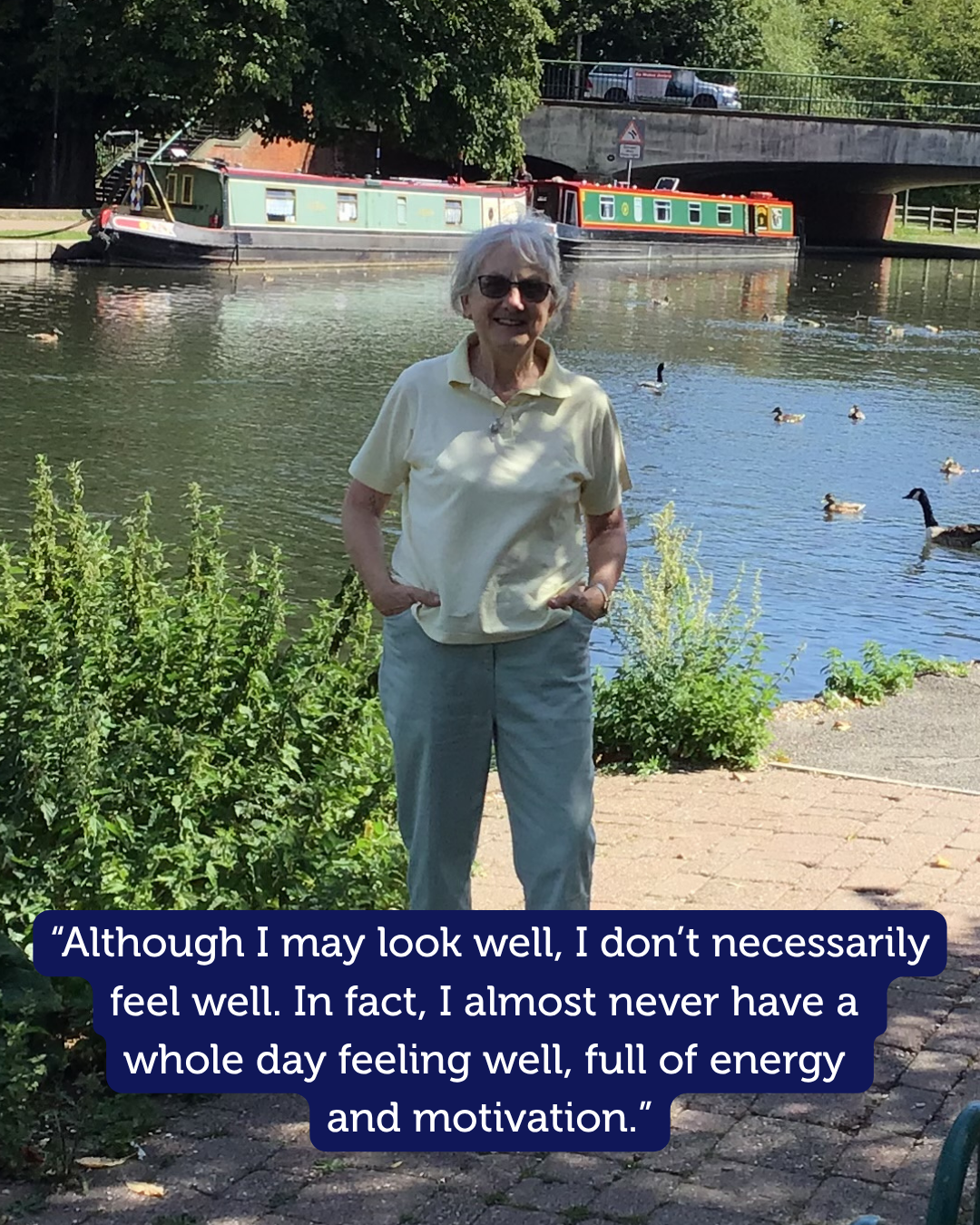
Another challenge has been helping others understand what she is going through. “Although I may look well, I don’t necessarily feel well. In fact, I almost never have a whole day feeling well, full of energy and motivation.”
How Sjögren’s has affected Helen’s life
The unpredictability of the condition has affected Helen’s independence and confidence. “Not feeling able to plan days out or holidays” has been difficult, she says, as she never knows how she will feel.
Travelling alone now feels daunting. “What if I’m too tired, lose energy, am unwell… and I’m on my own?”
Driving, something she once did regularly over long distances, has also become more challenging. “My arms ache on shorter journeys now,” she explains. Dry eyes are another issue. “If I need to put drops in, I can’t do it, which then makes driving difficult.” She now needs to stop at least every hour on longer journeys to manage discomfort.
Day-to-day life also requires careful planning. “Making sure I’ve always got the meds I need” can be stressful, especially as some medications, like eye drops, give little warning before they run out.
“I am tired a lot of the time and lack energy and motivation. I have to be careful not to do too much even if I feel ok, as I can use too much energy then be unable to do much for days afterwards.”
Finding support
Helen found out about The Wren Project while searching online for support with autoimmune conditions and Sjögren’s disease in particular.
After her diagnosis, she also joined a national Sjögren’s organisation but found there was no local group in her area. So she decided to start one herself. “Talking to those who understand and belonging to the Sjögren’s support group was a huge help.”
At a time when she was feeling emotionally low, she reached out to The Wren Project and received two separate three-month periods of listening support.
“I found it really helpful,” Helen says. “Having someone who understood the difficulties of living with an autoimmune disease… but also someone who encouraged me to be positive and have a different perspective on the present and future.”
The experience left a lasting impact.
“I came away with renewed belief that I could live positively with Sjögren’s disease.”
Helen also highlights the importance of informed healthcare. “Also seeing doctors who know about Sjögren’s disease and understand the difficulties of living with a chronic autoimmune disease” has made a difference. She notes that awareness can sometimes be limited. “GPs don’t always know about Sjögren’s, which makes getting help… really difficult.”
Helen’s advice to others
For those who are newly diagnosed, Helen offers clear and practical advice. “Join a support group, find a doctor who knows about Sjögren’s disease and talk to someone at The Wren Project.”
She adds, “You can live well with Sjögren’s disease with help and support.”Today, Helen reflects on how far she has come.
“From never having heard of Sjögren’s disease or knowing anyone with it, I now have a good network of support.”
She also takes comfort in knowing that help is always available. “I know that I can always get back to The Wren Project for further support if I need it.”
Helen’s story is a powerful reminder that while living with a chronic condition can be challenging, connection, understanding and support can make a meaningful difference.
Helen shared her story with the Wren Project as part of our Wren Voices campaign. If you would like to share your experience of autoimmune disease with us, you can reach out by emailing hello@wrenproject.org.
If you live with an autoimmune disease and would like to access free emotional support from the Wren Project, you can reach out to us here
If you would like support specifically for Sjögren’s disease, you can reach out to Sjögren’s UK here.