

Ruth’s journey: Polymyositis with Scleroderma overlap and Raynaud’s.
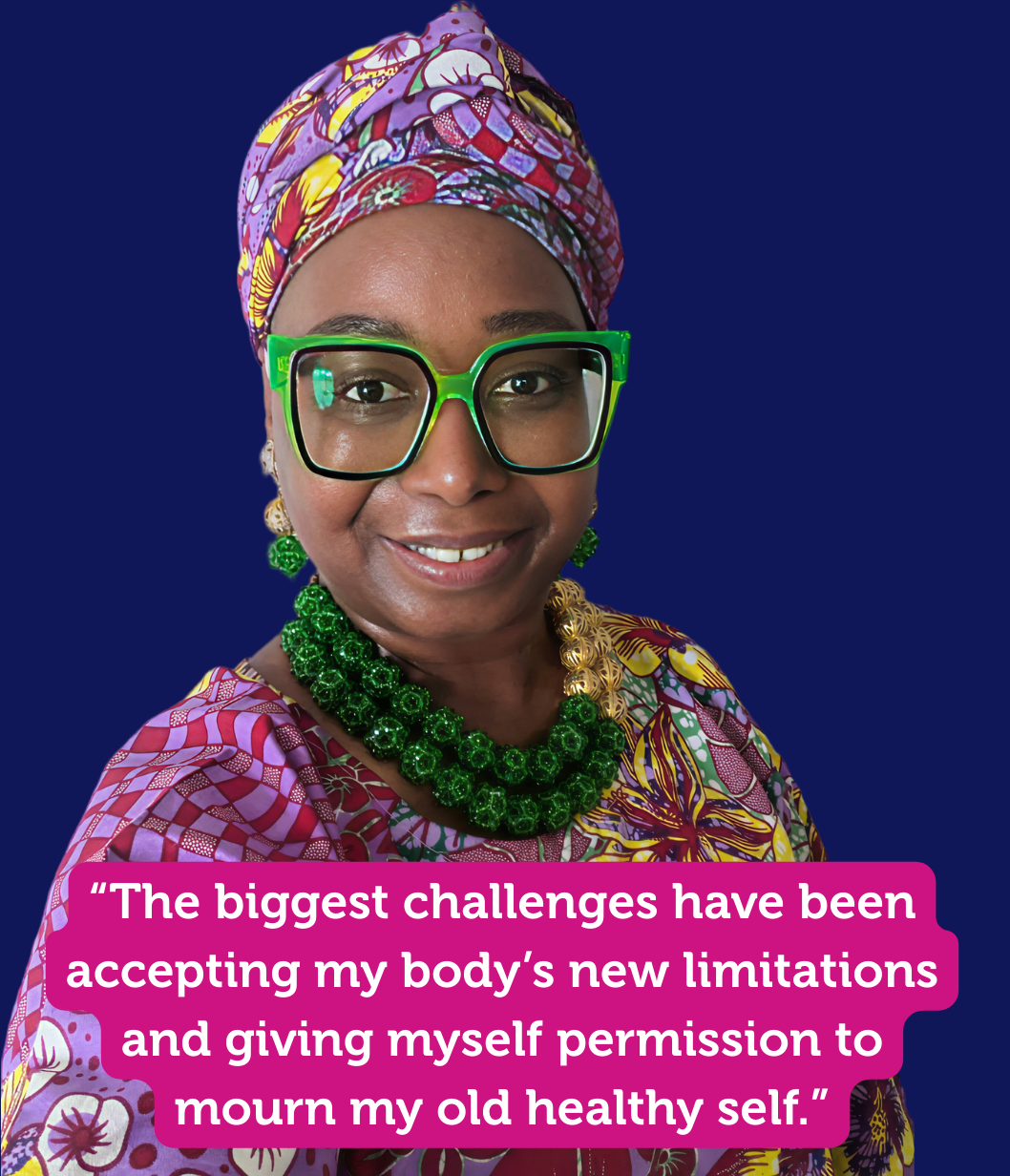
Ruth, from London, initially thought she was coming down with a cold, when her symptoms worsened considerably and she found herself in extreme pain and struggling to breathe. Six months later, she was diagnosed with polymyositis with Scleroderma overlap and Raynaud’s, among other conditions. Here, she shares her story.
“My journey to diagnosis began with symptoms that I initially thought were just a cold. I expected to recover in a few days, but instead, my condition worsened significantly,” she said.
“I experienced severe pain all over my body and struggled to breathe. I felt as if my body was failing.
“During this time, I lost a lot of weight, dropping four dress sizes in six weeks without trying. I visited my GP several times and had many blood tests, but was often told I was fine.
“Finally, I saw a GP who reviewed my medical history and blood test results; she was visibly shocked. She quickly arranged for me to go to the hospital by taxi, insisting on urgent care. That marked the beginning of my diagnostic journey.”
Ruth was 34 years old when she first started experiencing symptoms of autoimmune disease. It took some months later for her to receive her formal diagnosis, which she described as both “frightening” and a “relief.”
“When I was first diagnosed, it was an incredibly lonely experience. My symptoms [had begun] when I was 34 years old, however, I was 35 when I finally received my diagnosis,” she explained.
“Around six to seven months later, I finally received a formal diagnosis. It was both a relief and frightening. I remember crying for a long time because it was overwhelming.”
Sharing some of the biggest challenges she has faced, Ruth shared that grieving her “old healthy self” has felt very difficult.
“The biggest challenges have [been] accepting my body’s new limitations and giving myself permission to mourn my old healthy self,” she shared.
“I also faced the difficulty of giving up full-time work and managing finances.”
She continued: “Living with multiple flares and complex symptoms has been very challenging. I had to give up my full-time job, but I was able to transition into a career working mostly for myself. This flexibility allows me to manage my workload more effectively and work at my own pace.”
Like many others living with a complex diagnosis, Ruth has learnt the importance of advocating for herself at appointments.
“Navigating the healthcare system and advocating for myself has been crucial,” she explained.
“I have learned to pace myself, listen to my body, and advocate for both myself and others.”
Ruth’s diagnosis has also meant learning to live with not only the emotional impact of her diagnosis, but also the physical changes.
She says this is something she is still on a “journey with” in her life.
“My experience has been a journey of continuous learning as my condition evolves. Being kind to myself and accepting my changing body has helped immensely,” she said.
“I have learned to accept my body’s limits and changes, including changes to my facial features over time. While I don’t fully love these changes yet, I am on a journey to like and accept my new self.
“I have become a patient advocate, working to support others. Despite challenges, I have adopted a positive outlook and enjoy life on my own terms, embracing opportunities I might not have otherwise taken.”
Ruth discovered the Wren Project on Facebook and later followed our page, visited the website and signed up for the newsletter.
“[When I was first diagnosed], I was unaware that organisations like Wren existed, and I did not see anybody who looked like me living with this condition.
“Reading quotes from others living with autoimmune conditions made me feel less alone and showed me there is a supportive community to connect with,” she said.
As Ruth continues to navigate her own personal journey with autoimmune disease, she said the love and support she has received from family, friends and her church community has helped “tremendously.”
“My faith, family, close friends, and church community have all been tremendous support,” she said.
“The care and compassion from my siblings, parents, and young nieces and nephews have meant a lot. My church family and close friends have also been absolutely fantastic. Without all of these people, I do not know where I would be today.”
As we approach Christmas and the winter season, Ruth has plans as to how she will manage the colder temperatures and the busy period.
“I manage cold weather by using an electric blanket, heated gloves, warm socks, and a hot water bottle,” she said. “I keep windows closed and only go out when necessary. I budget carefully to afford heating and sometimes take taxis in very cold weather.
“For Christmas, I prefer a quiet, calm celebration on my own terms. I limit visits with family to avoid fatigue and listen to my body. This year, I plan to celebrate in a warm climate and connect with family via video calls.”
Sharing her advice for others living with the complexities of autoimmune disease, Ruth said embracing that your journey will be a “marathon with ups and downs” helps.
“Breathe and take things one second at a time,” she mused. “[You] are not alone, and [your] emotions are valid.
“Alongside medical treatment, seeking support from organisations like the Wren Project is important.
“Embrace your new normal; it is a marathon with ups and downs. Be kind to yourself and do not hesitate to ask for help. Some people may struggle to accept your new reality, but do not dwell on that for too long.”
Ruth shared her story with the Wren Project as part of our Wren Voices campaign. If you would like to share your experience of autoimmune disease with us, you can reach out by emailing hello@wrenproject.org.