

‘I was diagnosed with Crohn’s at 18…it hit me when doctors said I would have this forever’
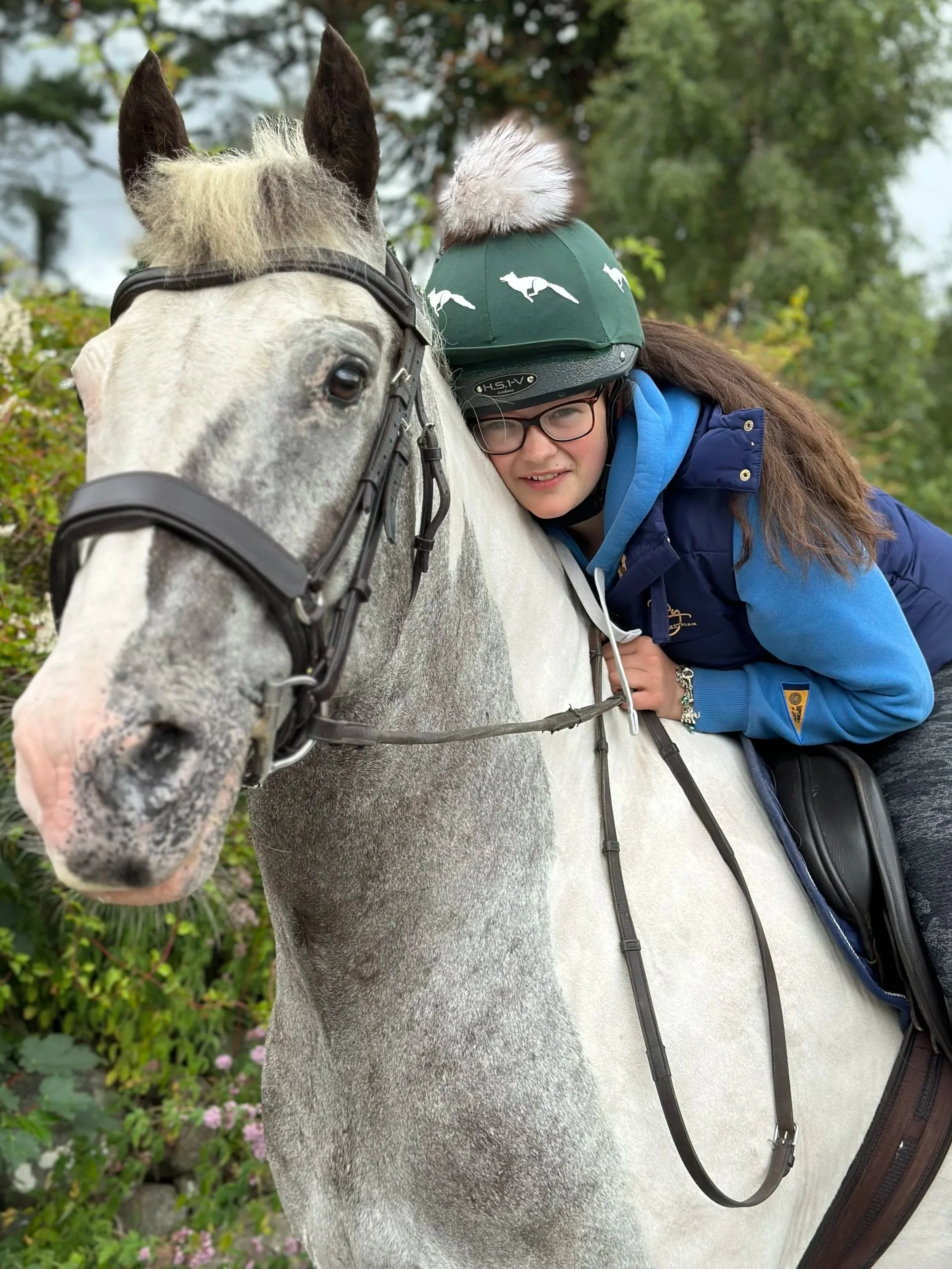
Arabella, 18, from Scotland, was diagnosed with Crohn’s disease five days after her 18th birthday. She said it all “started to unroll” when she realised she would have this disease for the rest of her life.
After initially experienced symptoms in August last year, Arabella found herself “feeling extremely tired all the time.”
“I had really bad stomach pains and didn’t have any energy at all,” she explained.
“I eventually went to the doctors in October 2024 and they thought I had a gluten intolerance. But after lots of tests, they all came back clear.”
Arabella was eventually sent to the gastroenterology unit for tests. But answers did not come quickly. “As everything does, it took a long time to confirm what was making me so ill.
“During that time, I was put on steroids to help with my symptoms. But as much as they kept my symptoms at bay, they had loads of side effects that weren’t very nice. They gave me brain fog, to the point where I couldn’t even ride my horse around a course of jumps, as I would forget where I was going.”
The psychological effect of this was something Arabella felt deeply. “I felt like people were laughing at me,” she admitted. “I remember coming out of that arena not knowing what was going on. Everyone watching and staring. I just broke down in floods of tears, because they had no idea what was going on. Of what struggles there were that day.”
With no diagnosis, Arabella wound up in hospital at Christmas time. Having infusions of steroids, her symptoms worsened.
“I had to go for more investigations and it showed more inflammation in my bowel,” she explained. “It still took them two months to properly diagnose what I had.”
Arabella was finally diagnosed with Crohn’s disease five days after her 18th birthday. But despite the difficult timing, she felt it was “somewhat of a relief.”
“I thought it would be fine and that the medicine would work straight away and that I could get on with my life,” she said. “But that was not the case. It all started to unroll that I would have this for the rest of my life. That I would have to battle this forever.
“It definitely hit me when the doctors said there is no cure for Crohn’s disease.”
Arabella, who reached out for support with the Wren Project after being recommended the service by a friend who volunteered, said it was helpful to talk to someone who “just listened.”
“It was lovely to talk to someone who just listened and let me talk about everything I was worried about,” she explained. “Just talking to someone who wasn’t family or friends made it feel like there was a relief as I could speak about anything to them.”
Nearly a year on, Arabella said the hardest thing has been realising that there is no cure and “grieving” her old life.
“I think the hardest thing to come to terms with this disease is realising that I have to live with it for the rest of my life. There is no cure for Crohn’s disease.
“Grieving my old life that had just been taken away. Not riding my horse for 5 weeks as I had no energy, not walking my dogs without my legs being in pain.”
After one medication failed, Arabella said she felt “back at square one.”
“I have already been through one medication that failed. It was so debilitating as I was quite literally back at square one.
“In between switching medications, all the symptoms I had [previously] all started to come back again. I ended up in the hospital where they could source the new medication. It feels like I am going round and round in a vicious circle.”
Adjusting to life with her autoimmune disease, Arabella said she does not like being treated differently or “talking about what I have.”
“I would say I am very good at saying I am fine when really I am not,” she said. “It gets hard when people say they know how I feel when they actually don’t. “They don’t know how hard it is to get out of bed and put a smile on my face and say everything is fine when it's not.
“It is easier to say that than explain what you have. Somehow, I always go around with that extra added worry about what people are saying or thinking about me.”
Like many others living with an autoimmune disease, Arabella finds herself feeling “frustrated” with not being able to do all the tasks she used to.
“Working with horses is a very physical job, so when I am outside all day I know I will pay the price in pain in the evening,” she said. “It gets so frustrating that I can’t do half the things I used to. It stopped me from going to college for two years.
“When you are thinking of reconsidering your dream job because you don’t think your body is going to take it without pain [it’s really difficult]. I didn’t know what more it could do to make life any more frustrating than it already is.”
Like many others, Arabella finds herself living with a degree of loneliness after her diagnosis. However, she has found community in the most unexpected of places.
“I got a saddle cloth for my horse with a Crohn’s & Colitis UK logo printed on it for when I go to competitions,” she explained. “I didn’t think anything of it until a lovely lady came up to me and said she had Crohn’s too.”
Sharing her experience to others who are facing a similar path, Arabella said “talking through your condition often makes you feel better.”
“Take each day as it comes and don’t get deflated when you hit a bump in the road,” she said. “It will eventually get better.
“It is very easy to start thinking about how things used to be, how you used to look and to worry about what other people think. But it is important that you know that you are going through your own journey.
“It can get so frustrating at times and there are more downs than there are ups but the people who get it will understand you and will stand by you.”
Arabella shared her story with the Wren Project as part of our Wren Voices campaign. If you would like to share your story, you reach out to us by emailing here.