

Living with rheumatoid arthritis at 43: Emily’s story
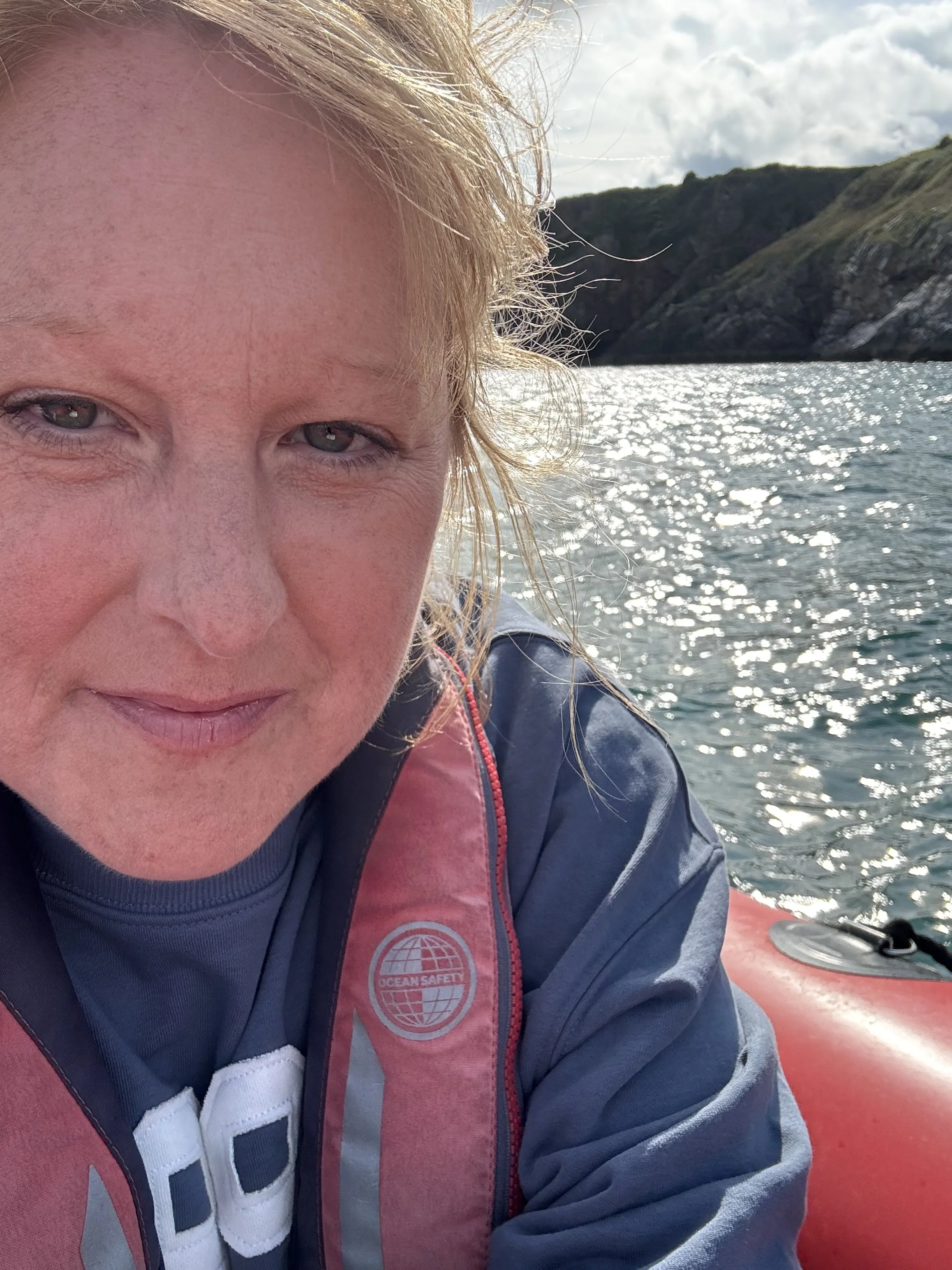
Emily’s diagnosis journey
It all started in 2018, when Emily ended up in A&E with an abnormally swollen wrist from wallpapering. She also had a frozen shoulder and felt like she had been persistently tired for a while; however the doctors were unable to explain what the cause of this was at the time. Fast forward to 2020, Emily contracted Covid which made her very unwell for months and was eventually diagnosed with long Covid. Her joints had become very swollen again and she also developed a limp in her right leg. The doctor struggled to pinpoint a diagnosis but eventually referred Emily to a physiotherapist in 2023. She was then diagnosed with Rheumatoid Arthritis at 43 years old.
“The physiotherapist took one look at my hands and ordered some blood tests. Within a week I'd had a text from her to say I had Rheumatoid Arthritis. I was at work and burst into tears. That was in June 2023 - 6 years on from my initial symptoms.”
How Rheumatoid Arthritis has affected her life
For the past five years since her diagnosis, Emily’s whole world has turned upside down. Not just from the daily toll of managing an autoimmune disease, but she has also found a new sense of what her body needs and what is important to her in life.
“Rheumatoid Arthritis has taught me that I need to listen to my body more and to trust my gut instinct. I have to rest whether I like it or not. I am not able to do what I used to do and I have to accept that. It makes me a different person, but it doesn't change my key personality, values or who I am. Life isn't about the big stuff. It is about the sunsets, people you spend time with and love, the books you read, trips you take; the joy in the small things.”
However, sitting down and resting isn’t always an option for Emily. She has found it particularly hard functioning as a single parent since her diagnosis as the mental load of living with a chronic disease, working to pay the bills and caring for a child weighs heavy.
“Everyone tells you how to deal with this disease. But that doesn't work when it is just you 24/7 and there is nowhere to turn. When there is no one else, you still have to do everything you can to live and look after your child.”
Having an autoimmune disease has also impacted Emily’s working life. She had to make the tough decision to leave her teacher assistant role that she loved and worked hard to get for a part-time job working from home, as teaching was making her too exhausted.
“It’s not the dream I had hoped for. It has meant that my world has gotten very small. I am on my own so much of the time now.”
Emily is incredibly grateful to her friends and her sister who have supported her through her diagnosis journey to now, holding her up through the tough times and taking her to hospital appointments as well as looking after her daughter when needed the most.
What Emily would say to someone who had had a similar diagnosis
“It will be ok” which she openly admits she hated hearing herself, but she also thinks it is ok to grieve and be angry about the situation that has been dealt to you. She also feels it is important to try and understand the disease and medications prescribed and to advocate for yourself through the difficult diagnosis stage. Emily has learnt a lot about herself and has been on a long journey of discovery with her autoimmune disease, something that has shaped who she is now and that she has done for herself and her daughter.
“I'm sorry to anyone that is going through this, because it is horrible, scary and unfair. But you can't change it and it will change you, just not necessarily in a bad way.”
Emily shared her story with the Wren Project as part of our Wren Voices campaign. If you would like to share your experience of autoimmune disease with us, you can reach out by emailing hello@wrenproject.org.
If you live with an autoimmune disease and would like to access free emotional support from the Wren Project, you can reach out to us here